Furniture that supports a company’s growth. Why Crebias chose Tesera four times
Crebias Co., Ltd. operates in the real estate industry.
The company implemented Tesera just as its business began to grow in earnest and its workforce started to expand. They have continued to use the system to this day, repeatedly expanding its capabilities to keep pace with their business growth.
In this interview, we spoke with President Fukazawa, the company’s CEO, about the reasons behind their continued choice of Tesera and his vision for office design.
—Could you tell us the background behind this office relocation?
The main reason is that our team has grown, and our current office has become too small to accommodate everyone.
As part of our mid-term goals, we’ve set a target to build an organization with 100 employees and 10 billion yen in revenue within the next 10 years. To prepare for that, we decided to move to an office that can accommodate around 30 to just under 40 people, which is why we’re relocating now.
It’s not just because we’ve outgrown our space; this move is a step toward taking the next leap forward.

—What kind of environment did you aim to create in the new office?
One of our guiding principles is “to always smile.”
We believe that if we aren’t smiling ourselves, we can’t make our customers smile either, so our primary goal was to create an office where everyone can spend their time with a smile.
To that end, we focused not only on the workspaces but also on designing the common areas.
We created a kitchen counter and a sofa area so that employees can enjoy a cup of coffee during their short breaks, chat with one another, or take a breather. We made a point of fostering an atmosphere where people can enjoy those moments.
In practice, everyone is naturally using the space—whether to chat over coffee, have lunch, or discuss upcoming events.
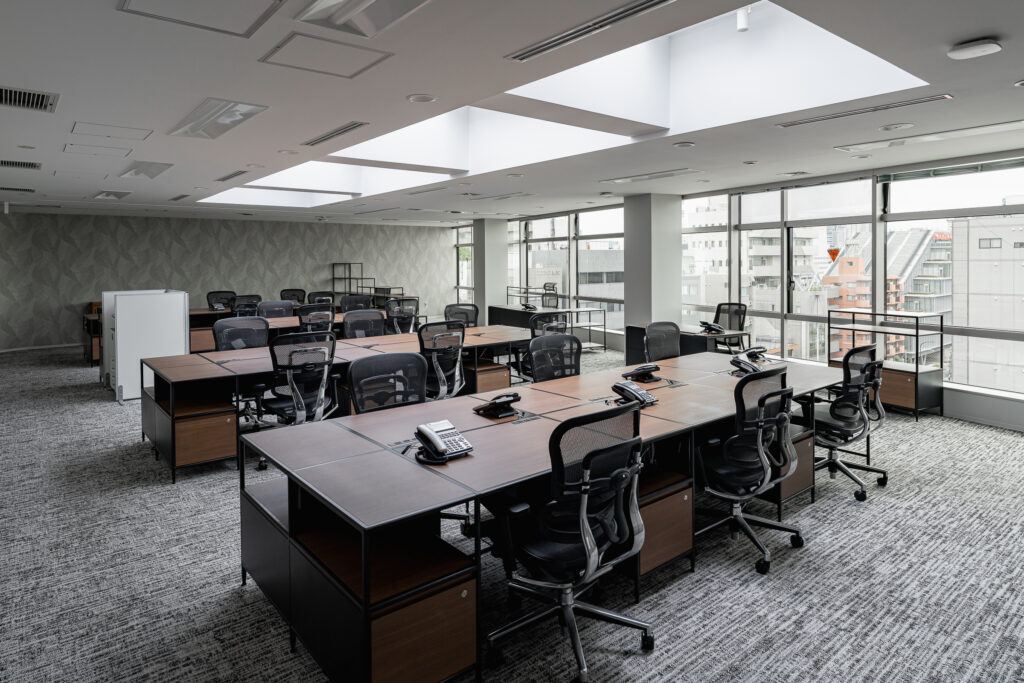
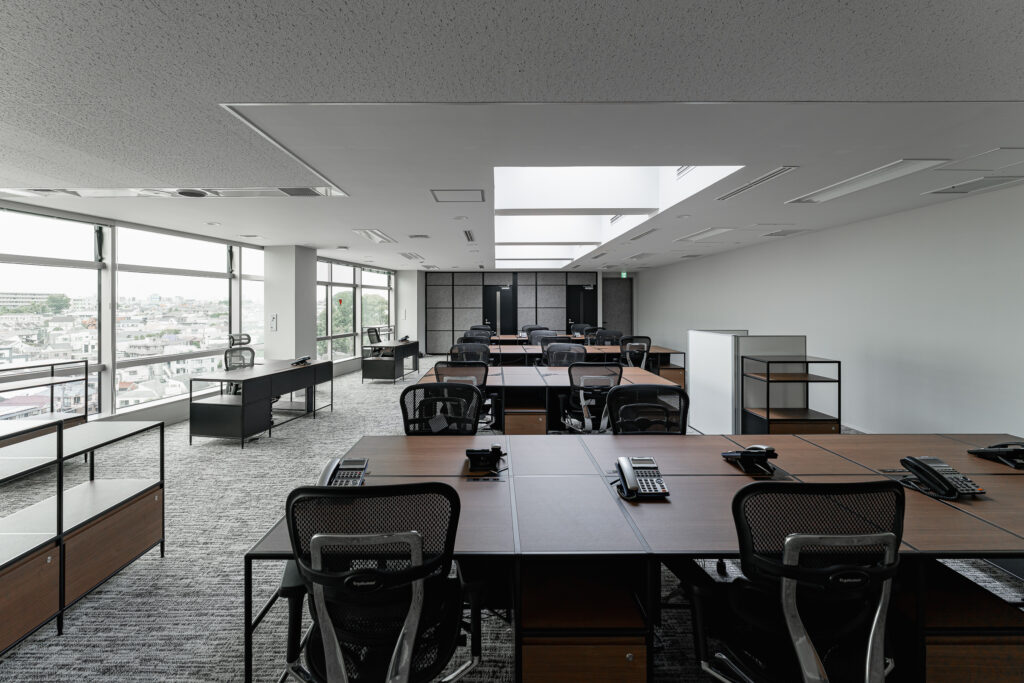
A unified workspace featuring Tesera desks
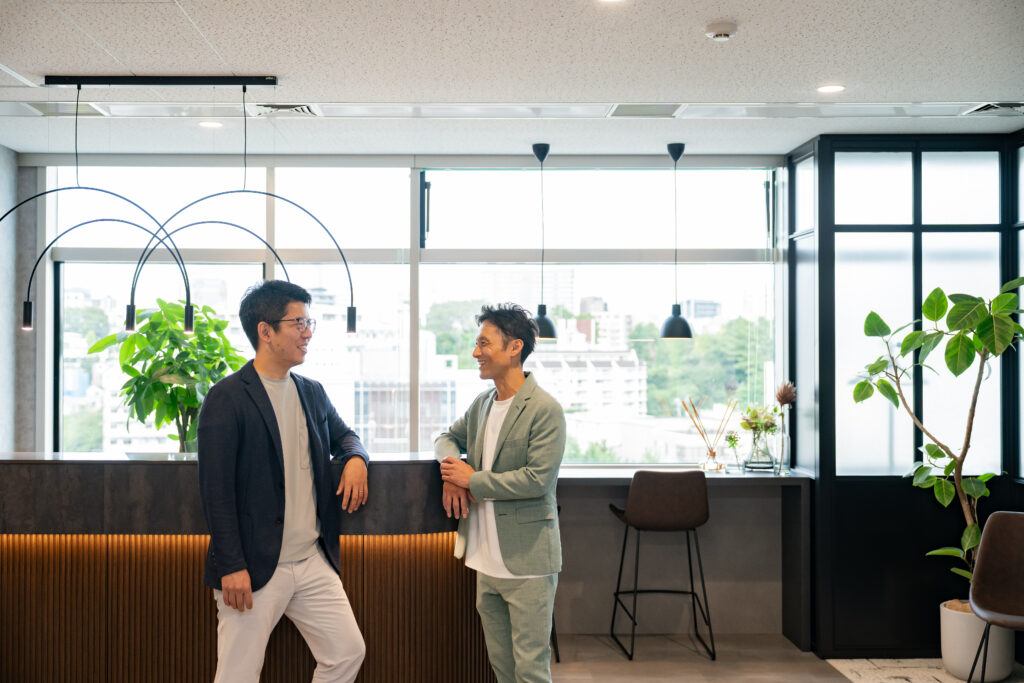
—You’ve chosen Tesera four times now. What’s the reason behind that?
To be honest, it’s not so much that we don’t plan to switch, but rather that we’ve reached a point where we can’t switch anymore (laughs).
We’re also quite attached to it as the first brand we ever adopted. But the biggest reason is that our furniture has grown alongside our company.
We started with five seats, then expanded to 12, then 14, and now we’re up to 24.
It’s interesting that we’ve been able to get this far by repeatedly adding to and rearranging the set-up without having to replace any of the furniture. Just seeing it gives me a sense of accomplishment, and I feel excited wondering, “I wonder what will happen next?”
I think this is furniture that offers that kind of excitement as well.
―How easy was it to change or expand the layout?
Of course, we had a few back-and-forth discussions along the lines of, “No, not like that—more like this.”
We considered both sleeved and sleeveless options, and since we could make adjustments like, “If we go sleeveless, we can fit a few more units in here,” it was easy to plan the layout.
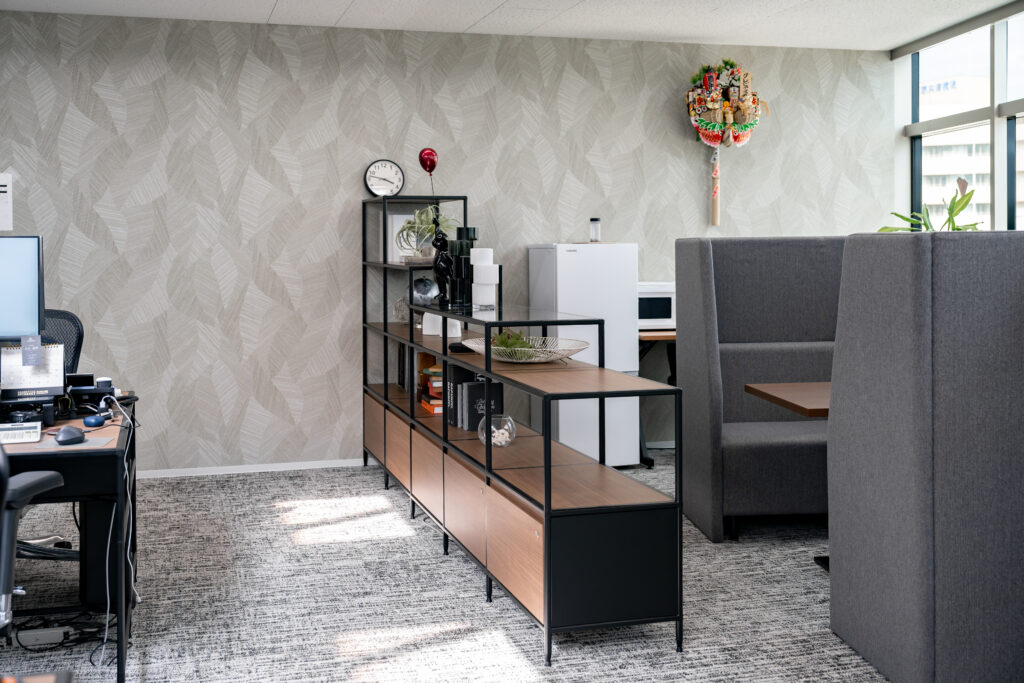
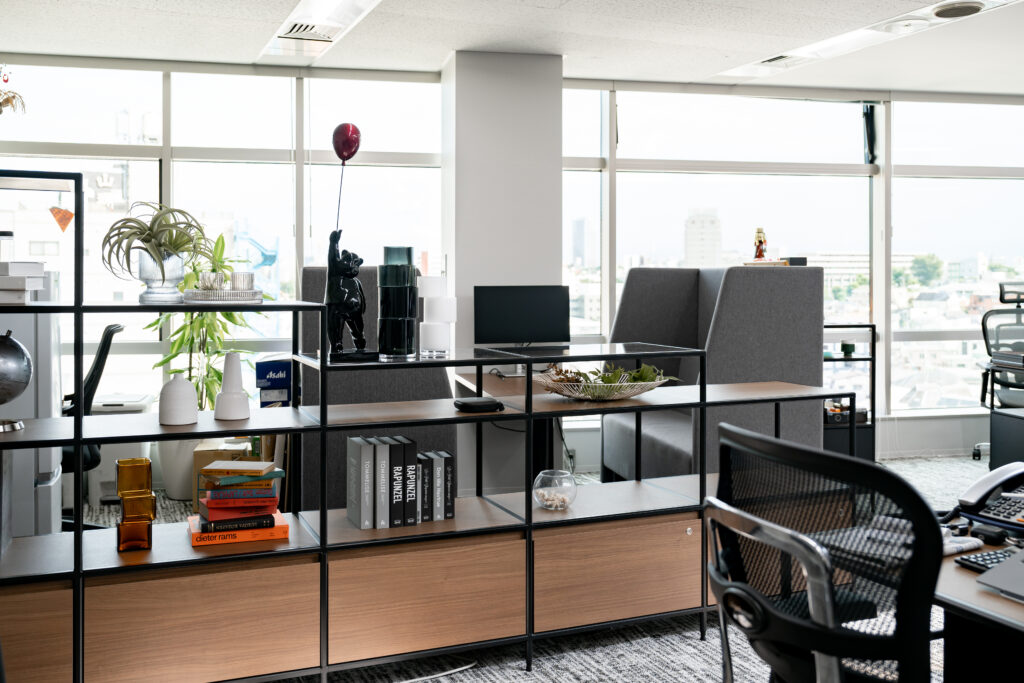
The stair-step shelves we used in the entrance are now being used as partitions to gently divide the common space.
It’s where employees eat lunch, but I don’t really mind it—the partitions feel very natural, and I think it’s great.
If we get more seats, we could use them in the workspace, or display them as decorative furniture in the common area.
I thought that was one possible way to use them.
―After using Tesera for a long time, what are your thoughts on it?
It’s definitely the fact that “a single piece of furniture can tell a story.”
It’s easy to naturally say things like, “We use Tesera,” or “We’ve added more pieces as our company has grown.” I think it’s interesting that we can convey our company’s history through our furniture.
Since we have employees who’ve been with us since the company’s founding, we sometimes look at old photos and say things like:
“That’s how it was back then, wasn’t it?”
“We’ve really grown this much, haven’t we?”
I think it’s precisely because we’ve continued using the same furniture that it becomes more than just equipment—it becomes the very history of our company.
For me personally, this is the first time in my life I’ve used the same piece of furniture for this long.

—Finally, could you tell us about your future plans?
Another goal we’ve set for ourselves is to “become the number one real estate company in Nakameguro.”
We founded the company in Nakameguro, but at the time, we didn’t choose it for any particular reason.
However, looking back, I realize it turned out to be a really great neighborhood.
I’ve come to live in Nakameguro myself, and through joining the neighborhood association and participating in the volunteer fire department, I’ve built stronger connections with the local community.
We want to be deeply rooted in Nakameguro and become a company that the community relies on. To that end, we’ll continue striving to be the number one real estate agency in Nakameguro.
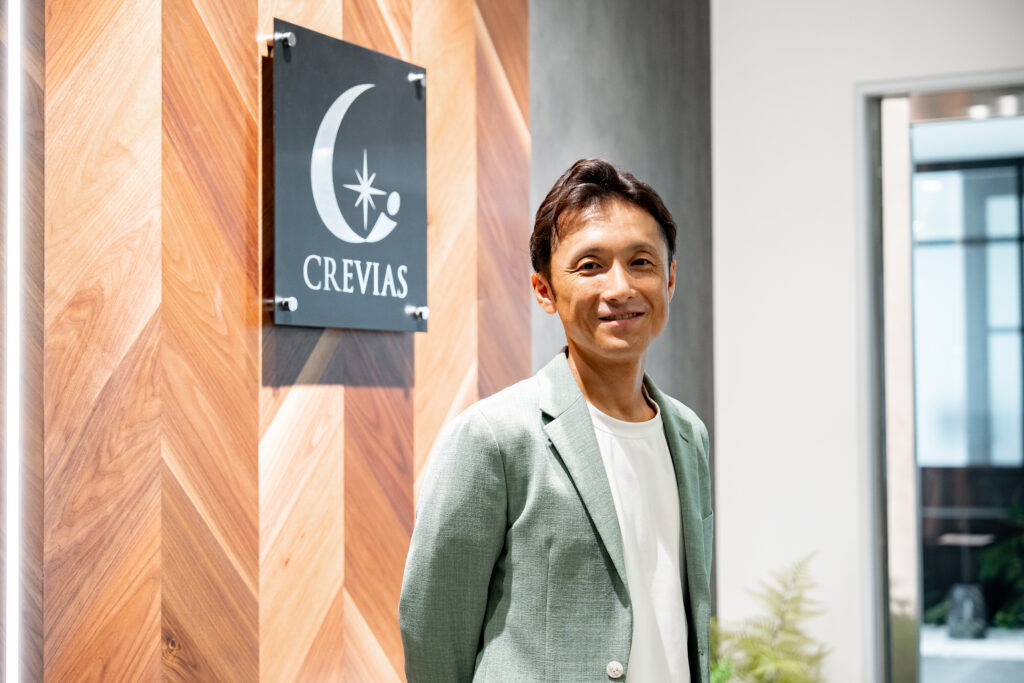
In Mr. Crebias’s office stands Tesera, which has grown alongside the company.
This history shows us that furniture is not merely an accessory, but becomes a part of a company’s history.
The previous interview article isHerefrom
You can view examples of Crebias delivery projects above.