Kanazawa Contemporary Tea Utensils Exhibition "Tea's Spacetime 2025" Exhibition at the Former Nakamura Residence
Overlaying contemporary aesthetics upon the spirit of craftsmanship that lives on in Kanazawa
The event "Tea's Spacetime 2025," held in conjunction with the international craft event "Kanazawa World Crafts Triennale" in November 2025, was organized to commemorate the 100th anniversary of the Kanazawa City Crafts Association.
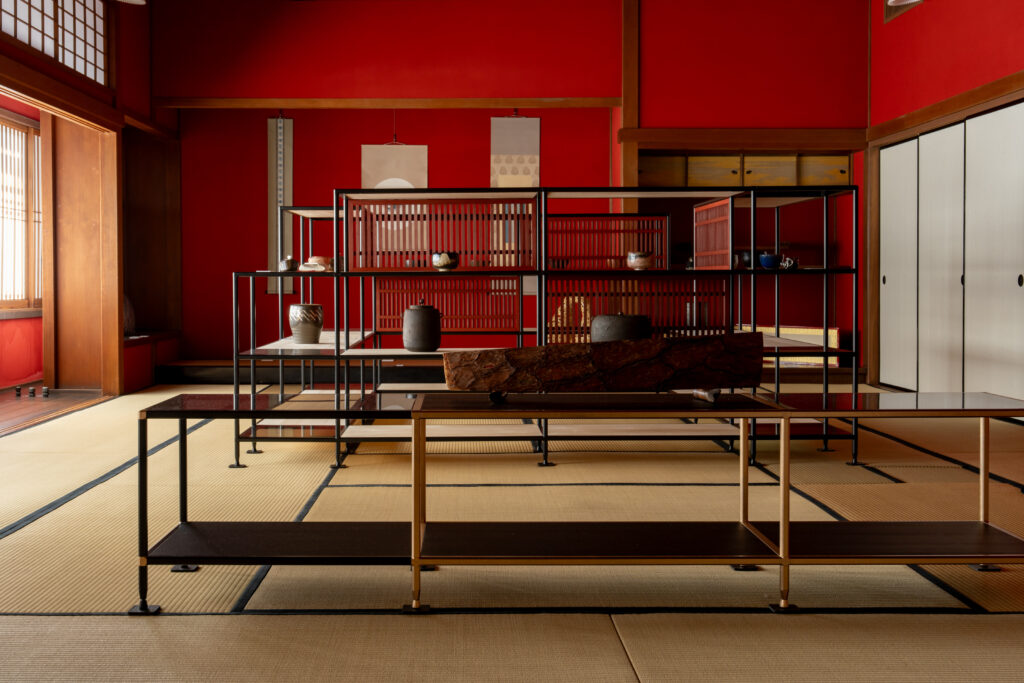
Hosted at the former Nakamura Residence, a designated preserved building in Kanazawa City, Tesera created modular furniture incorporating traditional craft designs. Amidst a gathering of masterpieces by past artisans and new tea utensils and crafts by contemporary artists, Tesera presented a new spatial concept against the backdrop of Kanazawa's culture, where traditional and modern design intersect.
The shelves displaying the works incorporate traditional lattice doors called "kimusuko" used in Kanazawa's machiya townhouses, the traditional craft of "gold leaf application," the traditional colors of "Kaga gosai," and "Noto hiba," the prefectural tree of Ishikawa Prefecture.
Traditional Materials That Hold Light: Gold Leaf
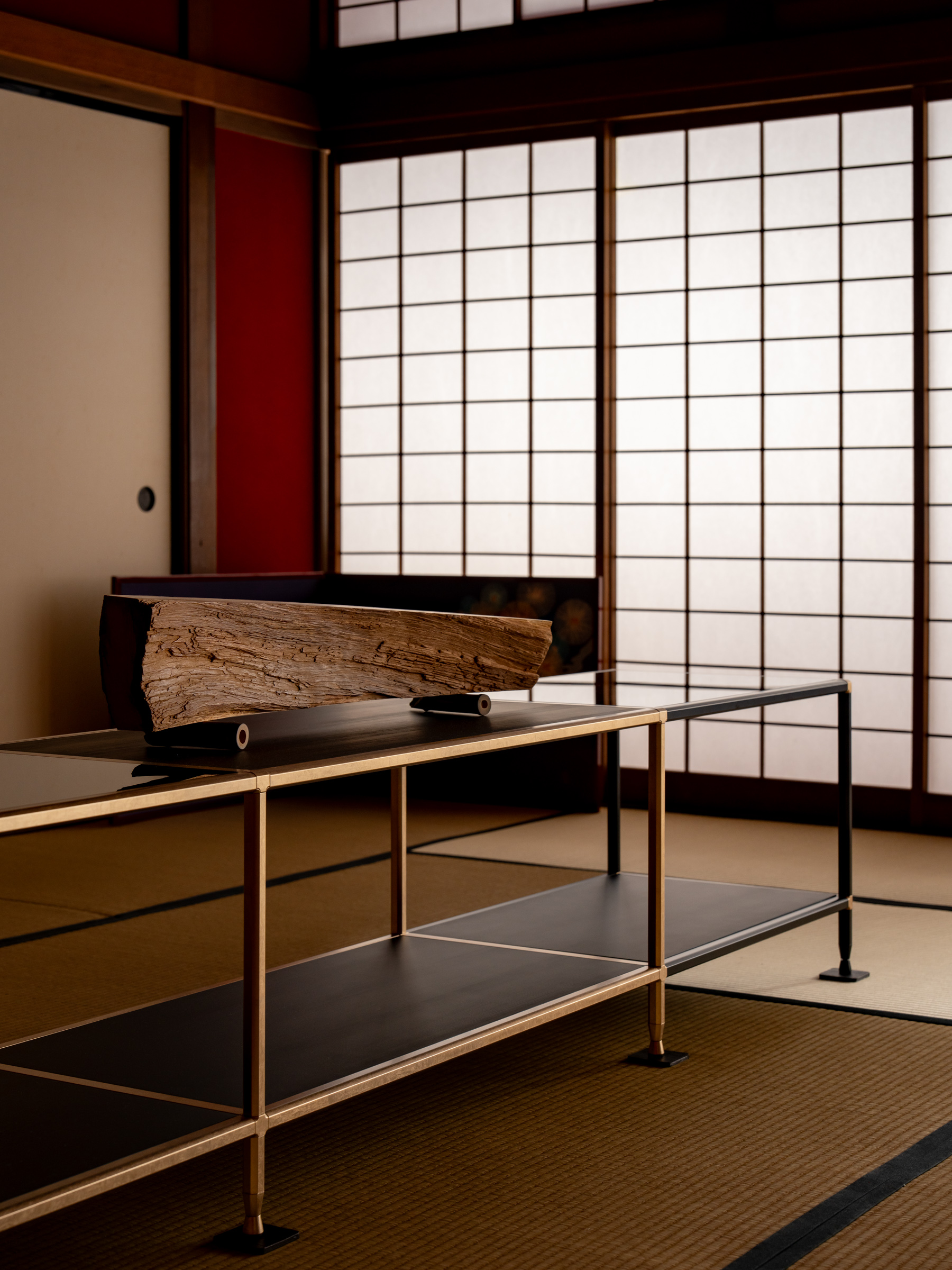
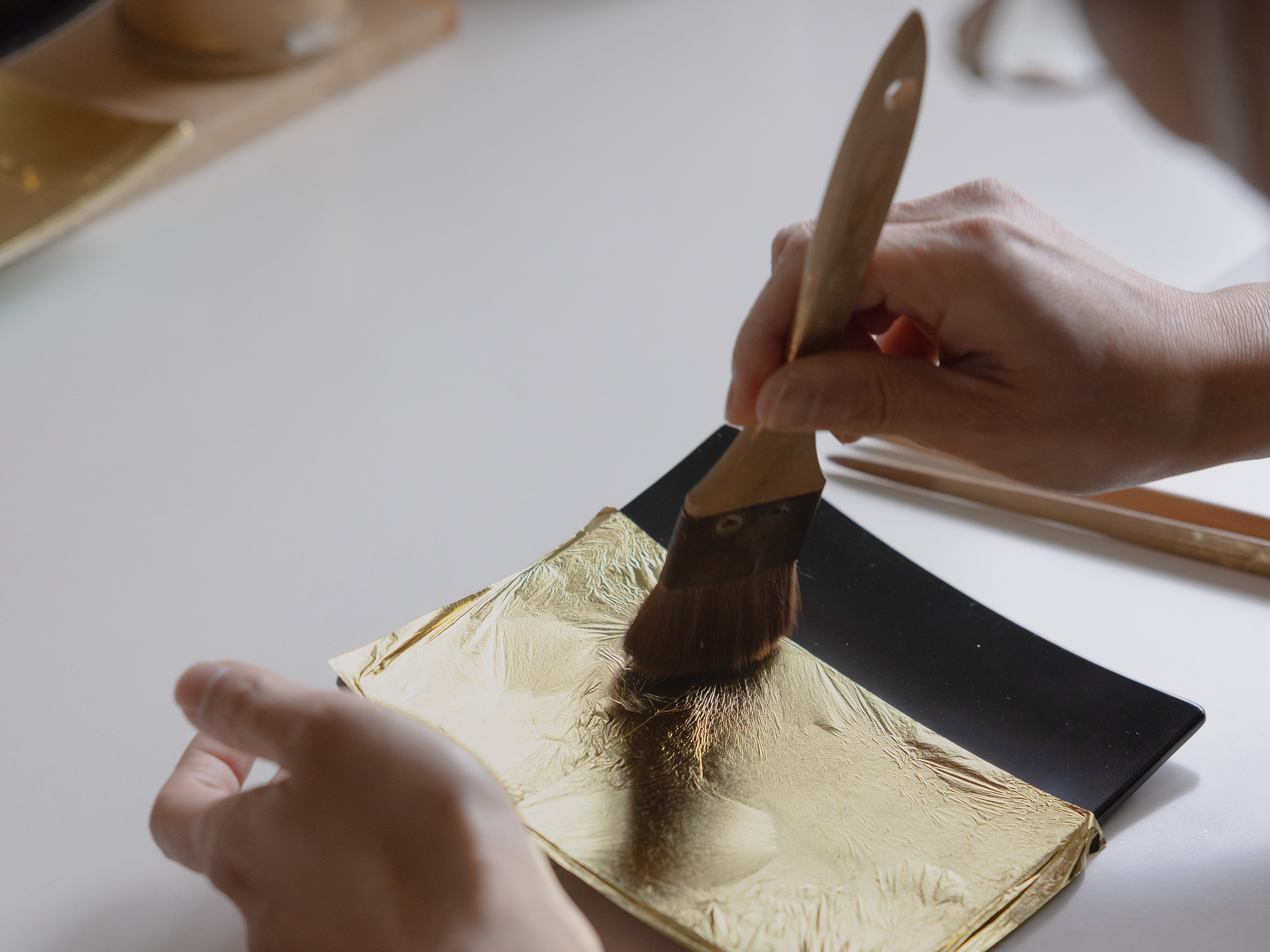
Extremely thinly hammered metal foil changes its reflections and shadows with every light it receives, creating a rich expression. Foil is not only a symbol of splendor; depending on the material—gold, silver, copper, platinum—it also conveys a sense of tranquility and depth.
In Kanazawa, which has long supported Japan's gold leaf culture, a traditional manufacturing method involving repeated hammering has produced gold leaf that combines delicacy with strength.
Tesera embraces even the slightest fluctuations and variations in tone as beauty, incorporating foil in a way that gently blends into the space.
Not mere decoration, but foil as a presence. With time, it deepens into a quiet depth.
Traditional Materials with Structural Beauty: Woodworm Cages
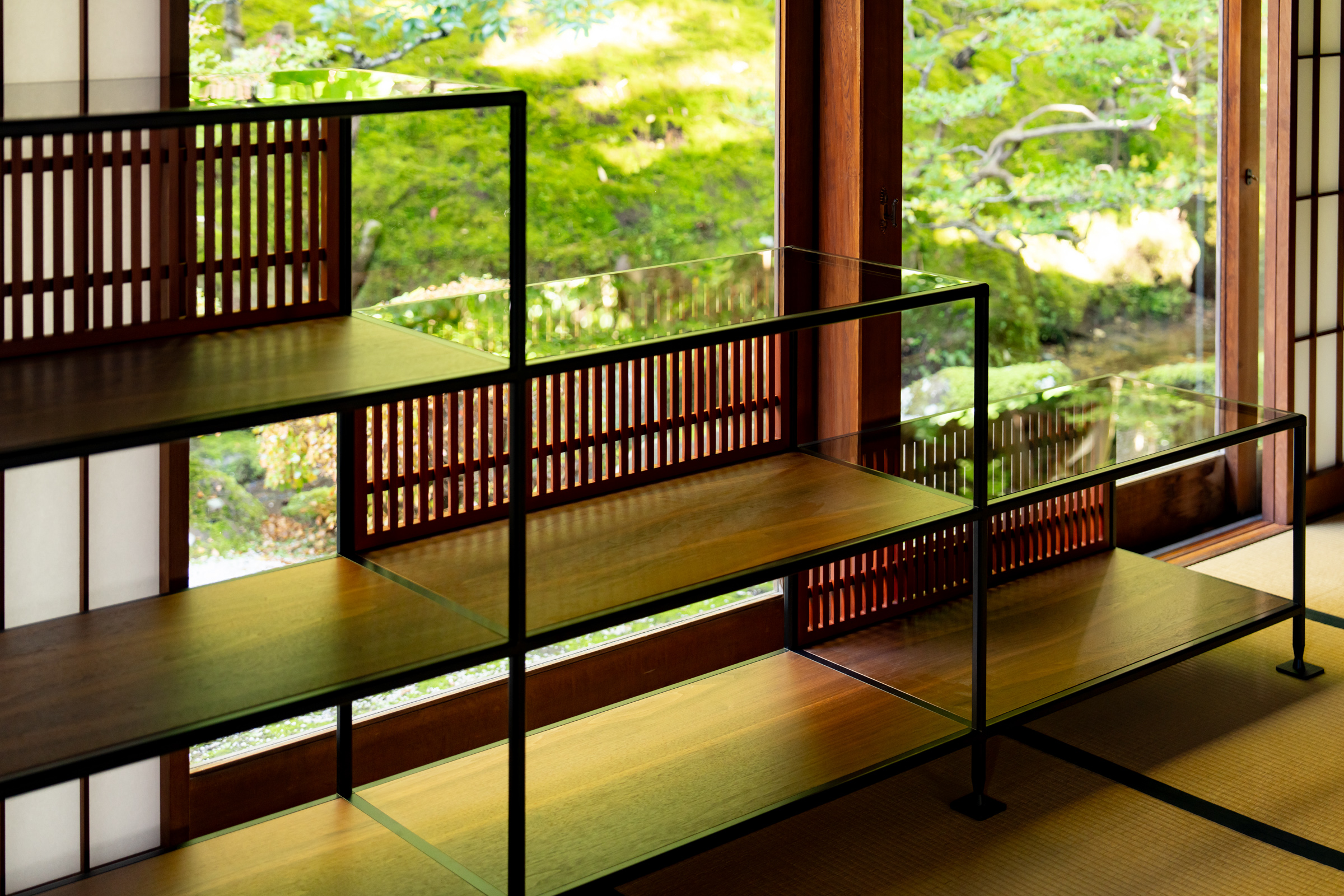
The wooden latticework is one of the traditional exterior designs found in Kanazawa's machiya townhouses.
The formal wooden latticework features narrow vertical slats arranged in a structure where the cross-section forms an isosceles trapezoid. This design makes it difficult to see inside from the outside, while allowing a clear view outwards from within.
This clever design allows light and wind to pass through while maintaining privacy, creating unique shadows and charm in the streetscape.
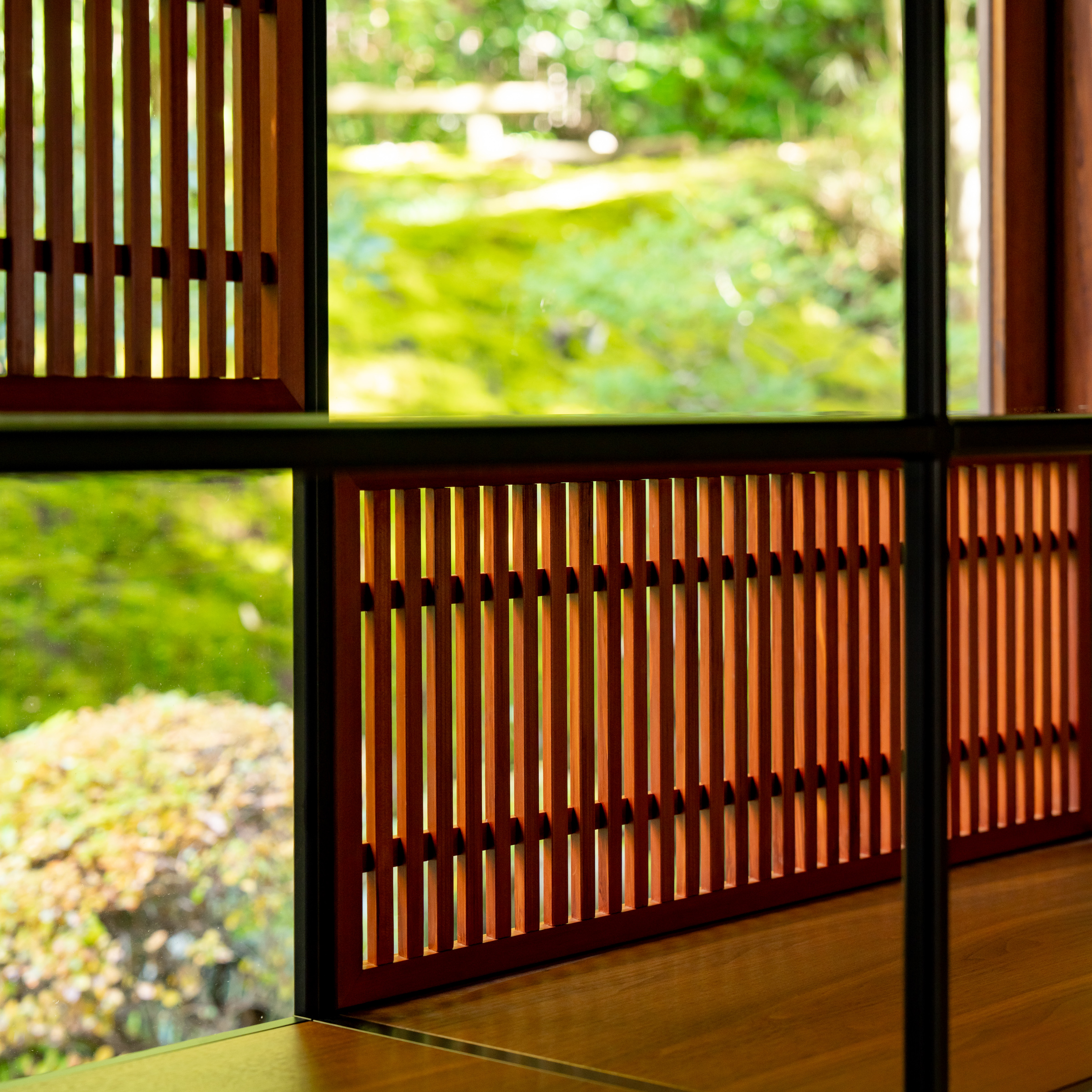
Tesera carries on the traditional structure and spirit of this wooden latticework, incorporating its beautiful lattice design into the frame.
Noto's climate nurtured this material—Noto Hiba—
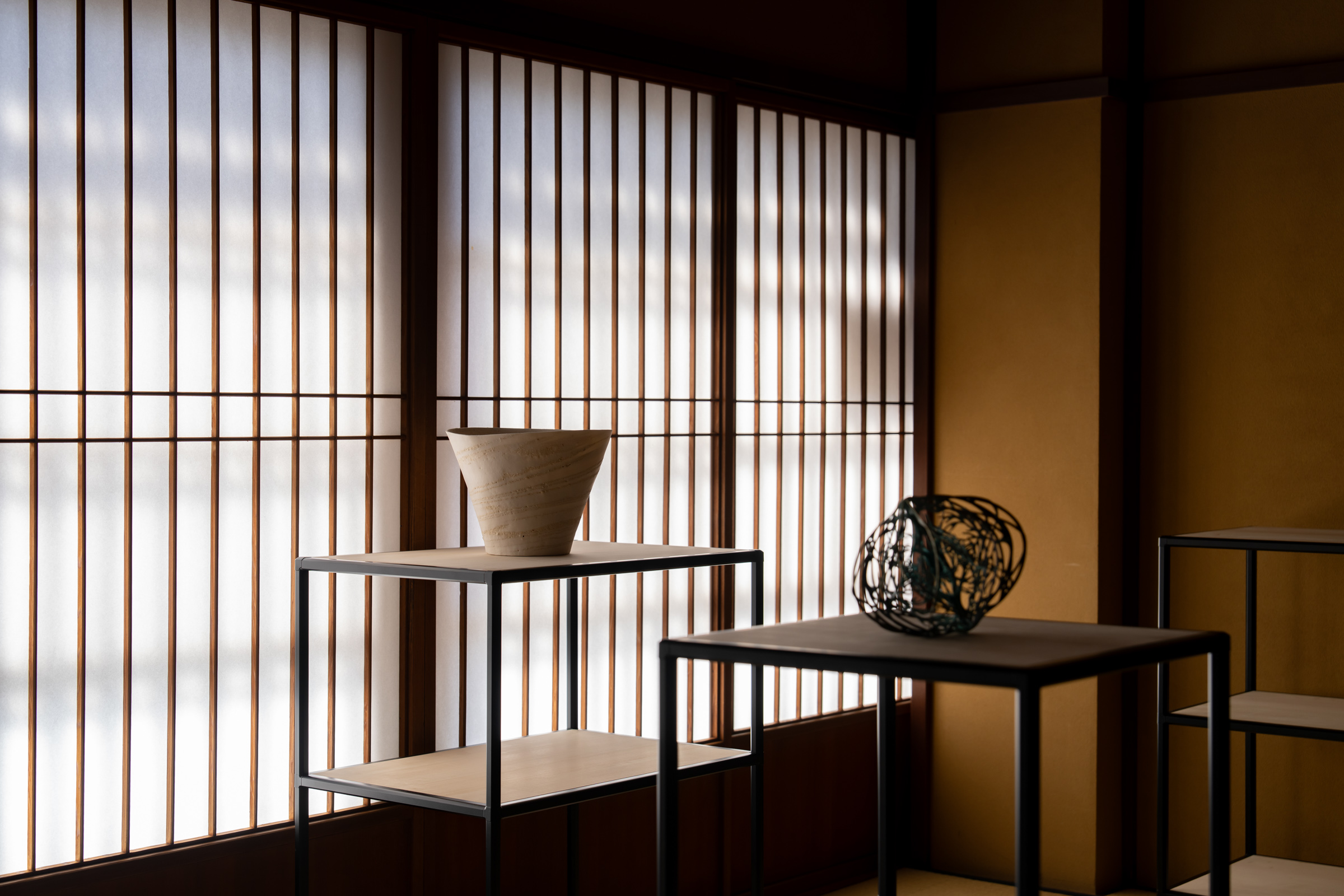
Noto Hiba, cultivated in the forests of Noto, Ishikawa Prefecture, is a representative timber of the region, designated as the prefecture's official tree.
It possesses excellent antibacterial and preservative properties, containing hinokitiol—a component that repels insects—and offers functional benefits.
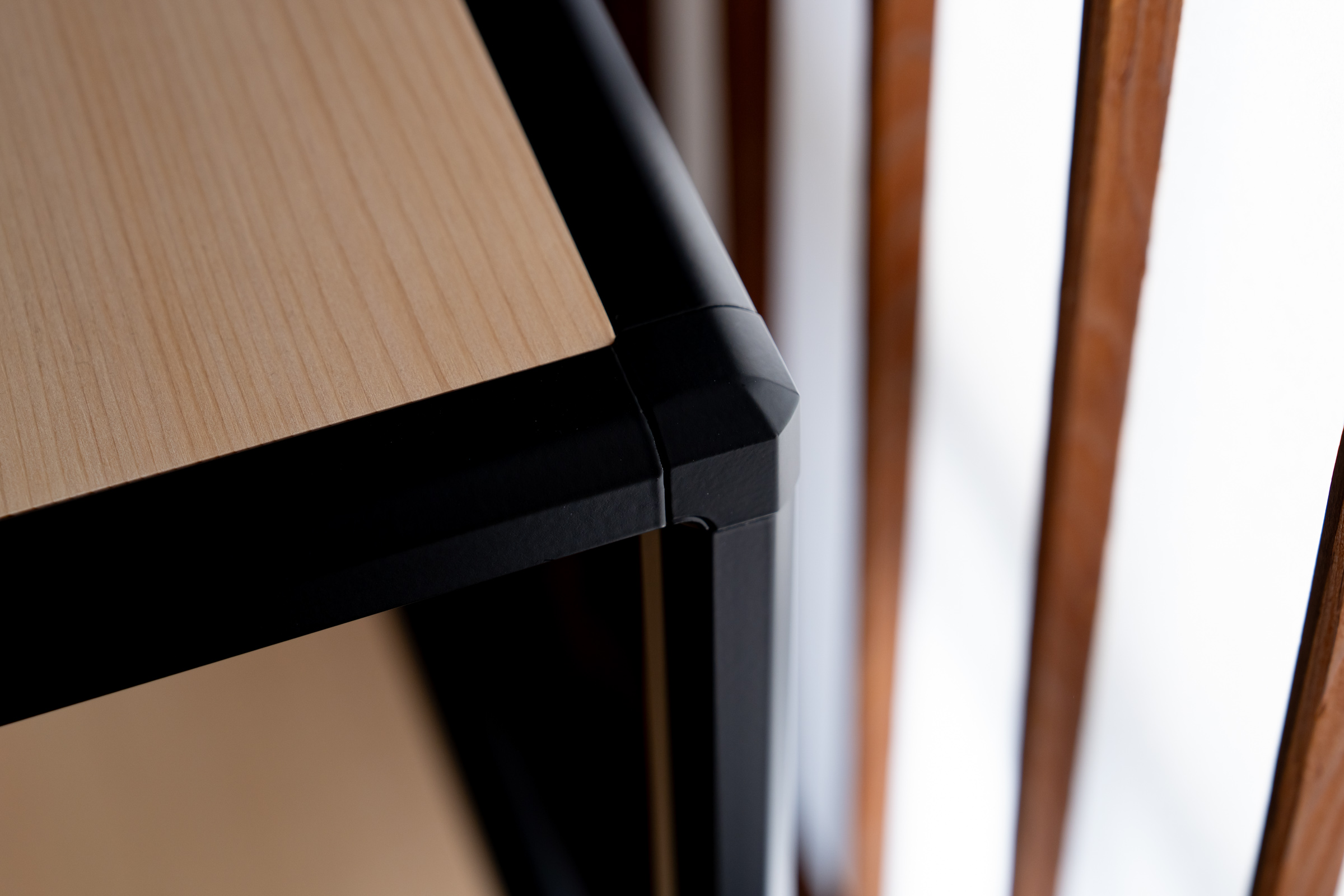
The fine wood grain and gentle, clear fragrance offer not only visual beauty but also a quiet comfort that begins the moment you touch it and continues throughout its use.
A single piece, imbued with the power of nature and the passage of time in Noto, quietly supports Tesera's presence.
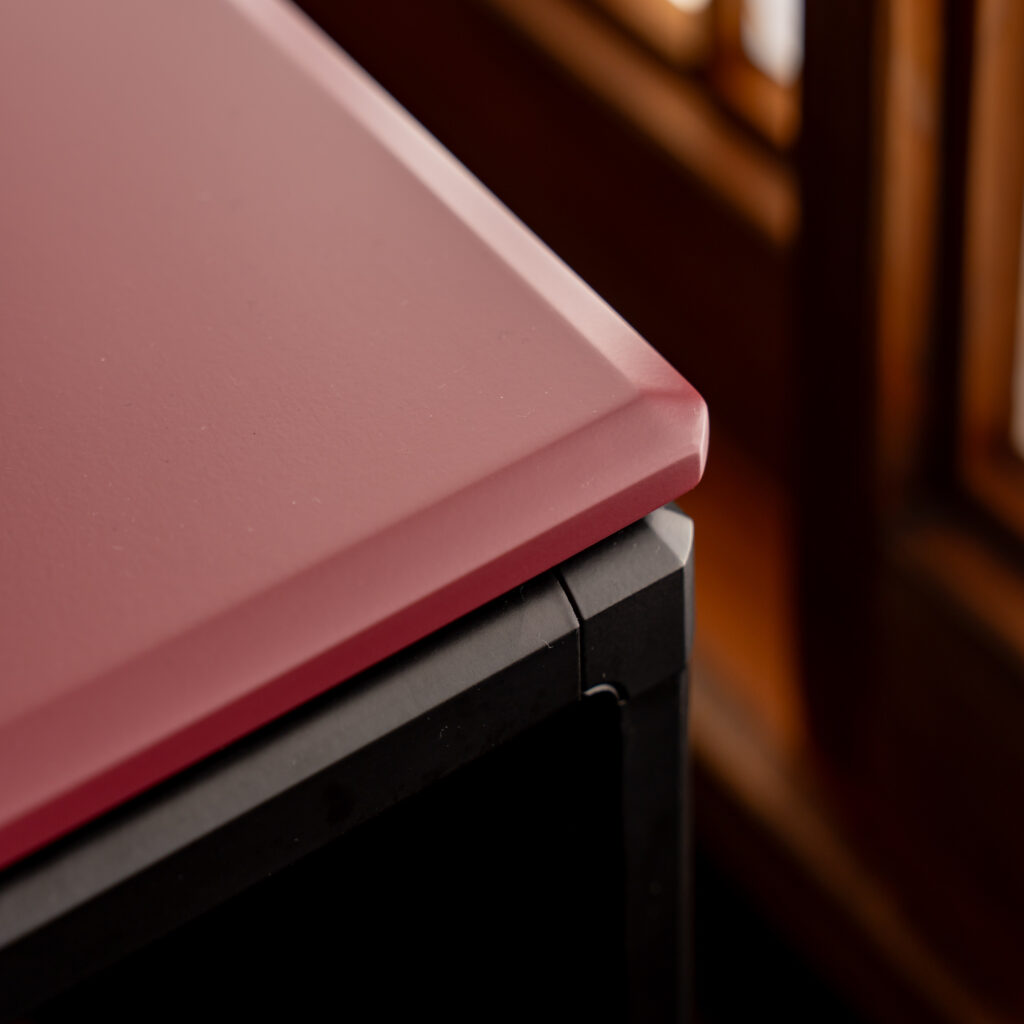
A color possessing quiet elegance—Kaga Gosan's Crimson—
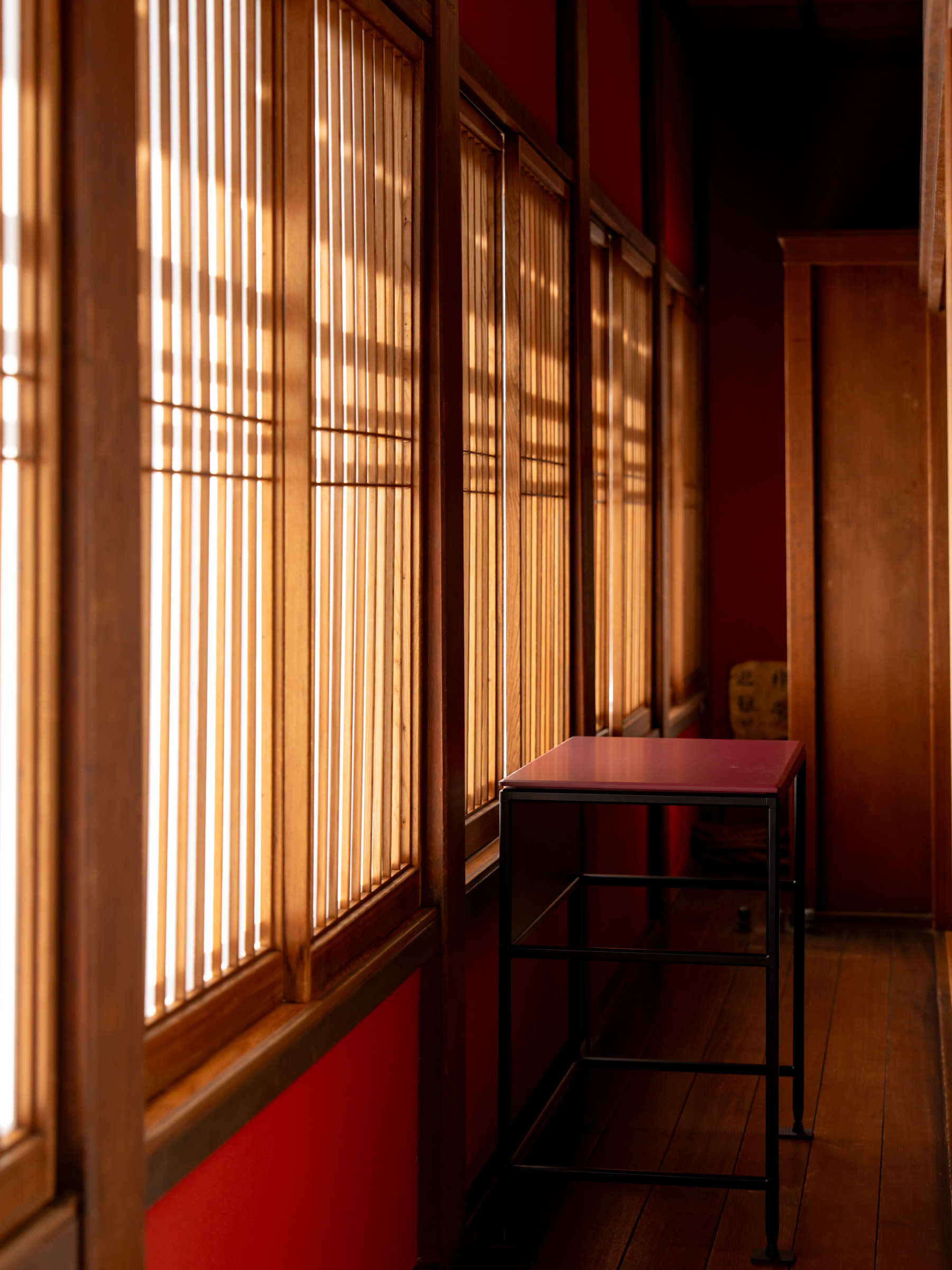
Kaga Gosanai represents the five fundamental colors symbolizing the aesthetic sensibility cultivated by the Kaga domain during the Edo period. Among them, the crimson shade—a deep, lustrous red with a blackish undertone—has been used in diverse crafts including Kaga Yuzen dyeing, textiles, ceramics, and lacquerware.
Alongside the development of townspeople's culture, Kaga Yuzen cultivated a rich color expression inspired by natural landscapes and flora, layering shades of five colors. These hues, combining both splendor and restraint, quietly reflect spirituality such as passion and depth, lending depth to the space.
The Tesera tabletop, finished in a deep crimson hue, is a piece that reflects prayer, memory, and the local climate, embodying the aesthetic sensibility of Kaga.